

Senses Working Overtime
Thoughts on the upside of sensitivity

I am a highly sensitive person.
And it’s not an easy thing for me to admit. Wrongheaded though it may be, there is a social stigma attached to the word sensitive that is difficult to shake, especially for a man of middle age like me.
I was raised in a culture of sports. Prior to age 20, sports talk represented about 90% of the content of my conversations with men. It’s hard to account for the remaining 10%, but much of it probably revolved around finding and consuming food. On the athletic field, toughness and aggression were the primary values. Sensitivity meant weakness, and perceived weakness left you subject to mockery and dismissal by teammates and coaches alike. The implication was clear. To be sensitive meant to be less than a man.
Little did we know then that my tendency to be easily overwhelmed by large noisy crowds or my struggle to sustain small talk at parties (i.e., my sensitivity) derives from the same source of sensory power I used to locate the open man under the basket across a crowded court or to read a pitcher’s body language before stealing second base.
Sensory processing power
Being a highly sensitive person (HSP) is not a deficiency; it’s a perceptual strength. Imagine a high-definition video camera with an ultra-sensitive microphone trained on a room full of people. Its job is to record every sight and sound within range, all at once. This is a useful metaphor for the way I, and many HSPs, absorb sensory stimuli. In a crowded room, I perceive every piece of available sensory information at an amplified level, and all—more or less—at the same time. As a result, I tend to notice details that others miss (e.g., telling shifts in body language, signs of danger, people’s unspoken emotional needs, etc.), but I am also prone to distress under what amounts to a flood of sensory input. To extend the metaphor, a camera doesn’t stop recording until it is turned off (or the batteries die—another fitting metaphor for what can happen to an overwhelmed HSP). Similarly, the HSP’s extraordinary perceptual ability is built-in technology; it happens automatically. Research indicates that high sensitivity may be, at least in part, genetically hardwired. There is no off switch. This highlights the importance of guarding against sensory overload. Out of self-protection, an HSP must know when it’s time to exit an overstimulating environment.

The upside of aging
There is an enduring myth that with age, we become inflexibly “set in our ways.” We’ve made up our minds about the right way do things, and we resist change. I think what is closer to the truth is we recognize that our energy is in shorter supply, so we are more selective about how to expend it. In some ways, this can put us behind the times. But it has a positive side. We tend to know what we want, and we are less afraid to speak up about it. We grow less concerned with what people think of us and less subject to social pressure. It’s an effect that shows up in some interesting—and entertaining—ways.
As a security measure, my elderly neighbor thinks nothing of approaching strangers on our street to ask their names, where they live, and what brings them to the neighborhood. If they’re not forthcoming, she asks them to leave and has been known to stand facing them—as if in a game of chicken—until they comply.
An older man I used to work with openly carried a package of flushable wipes with him to every restroom visit and thought nothing of detailing their hygienic benefits to anyone who expressed curiosity (and often to those who didn’t).
In my case, I’ve gotten more comfortable talking about how I navigate the world as a sensitive person. Thankfully, it’s not a requirement that you get old to do so. To that end, I have some suggestions to get you moving in the right direction if you think you might also be highly sensitive.
Stop apologizing
I have spent most of my life trying to hide my sensitivity. It’s what I was conditioned to do. From an early age, I was taught that sensitivity is a shameful, unmanly characteristic to be conquered with toughness and self-reliance. Being sensitive was synonymous with being too sensitive. It meant there was something wrong with you that needed fixing, and it’s why so many HSPs wrestle with low self-esteem.
When I first learned of the term highly sensitive person or HSP, I reacted with skepticism, as many people do. I read it as an excuse for submission to weakness. Such was the extent of my conditioning. Eventually, through research and much discussion with friends and family, I came to understand that sensitivity is simply a matter of sensory processing. I experience a heightened version of the world, physically, socially, and emotionally. It’s a personality characteristic borne of both nature and nurture like any other. The irony is in how much toughness it takes to be a highly sensitive person. Managing the pros and cons of being an HSP starts with accepting who you undeniably are and refusing to apologize for it.
Let yourself be supported
Presumably, your inner circle of closest friends and family already loves and accepts you as you are. But when it comes to inviting new people in, I have learned the value of taking your time, especially when it comes to romantic partners. Be open with new people about how you process the world as a highly sensitive person and gauge their reactions. Initial signs of skepticism may amount to a simple lack of understanding that will improve as they get to know you better (recall that I experienced a similar period of skepticism about my own sensitivity) but be wary of any suggestion that you are “too sensitive” or that your inherent sensitivity is a weakness you should work on overcoming. These are red flags. As an HSP, there is a good chance your intuition is strong. Trust it. Move on from unsupportive people. Those who respond with genuine empathy, curiosity, and especially, a sense of humor to your stories of sensitivity are the ones to keep around.
Use your powers wisely
It has been exhilarating to learn that a trait I spent most of my life trying to suppress has tremendous value in the world. Like many HSPs, I am like a thermometer for the emotional temperature of a room. I used to coordinate Individual Education Program (IEP) meetings at a school for students with learning disabilities. These could be emotionally-charged events. Students often came to the table with low self-esteem, having struggled in school for years. Parents were at their wit’s end, worried about their child’s future, sometimes blaming the school, often blaming themselves. Depending on experience level, teachers could appear shaky and uncertain, inflexible, or even dismissive. Defensiveness was a common starting point on all sides. My strength was in quickly assessing each participant’s emotional position. I was expert at pinpointing the type of support each party would need to make the meeting a success. It was incredible. Just being myself, perceiving the world the way I automatically do, made me great at my job. But it’s not an approach that works equally well in all situations.
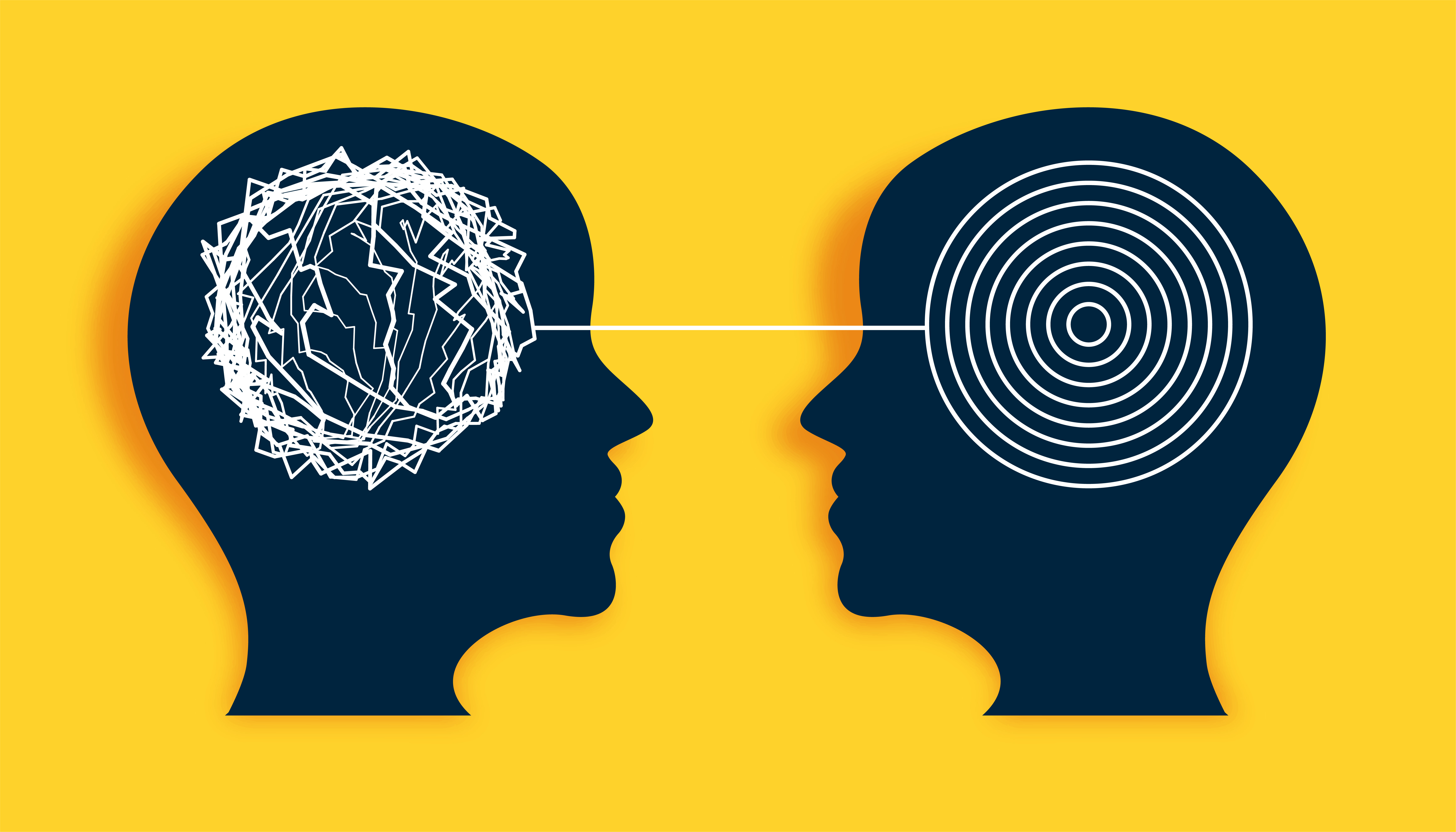
Close friends and family sometimes find it unnerving how effortlessly I seem to intuit their emotional states. The accuracy with which I read every fleeting shift in vocal tone and facial expression has been described as “like having you inside my head.” And while that might make for an interesting episode of Black Mirror, it sounds like a nightmare in actual practice. In response to this, I engage in an intuitive process I think of as a stoplight approach. A red light means I have noticed that something is weighing on a friend or loved one’s mind, but I should stop and think before bringing it up. They may simply need the time and space to process it on their own. Not everything requires my intervention. A yellow light means my initial sense was somehow reinforced over time, and a quick check-in may be warranted. A green light represents a strong sense that there is an immediate concern in need of discussion. It’s not a highly scientific system, but it seems to work.
I will never stop paying such close attention to my loved one’s feelings. As an HSP, it’s simply how I am built. And it is undeniably a positive thing. It makes me the person who knows them best—the one they can trust to be present when the need is greatest. But that doesn’t preclude respecting their boundaries and allowing them the space to take care of themselves.
I am struggling here to avoid the cliché that with great power comes great responsibility, but it’s a cliché because it’s true. In the case of being a highly sensitive person—or any human for that matter—the primary responsibility is to yourself. It’s an ongoing process of learning to accept your limitations so the inherent strengths of your sensitive nature can shine through.
Think you or someone you know might be highly sensitive? It’s a scientifically-researched characteristic with a genetic basis found in 20–30% of the population. Read more about it here.
Thank you for this, Craig. It resonates deeply with me.